
Ultrasonic welding or splice crimping: a comparison

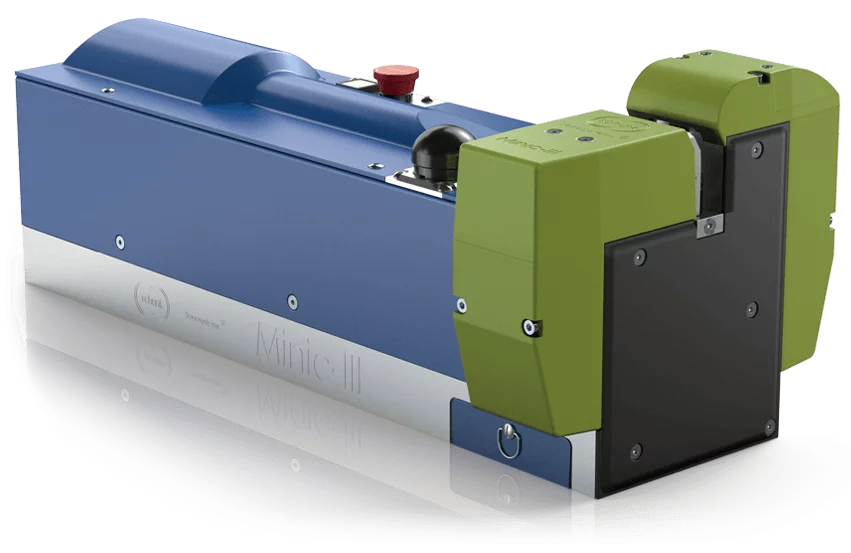
The short answer: In ultrasonic welding, wire strands are joined directly using high-frequency vibration and pressure, without solder or a metal sleeve. In crimping, the wires are connected through a metal splice sleeve compressed by an applicator. The choice depends on the materials, wire combination, connection requirements and production process.
How does ultrasonic wire welding work?
The stripped ends are placed in the machine's tooling nest. The tool, or sonotrode, presses them together and transmits high-frequency mechanical vibrations. Friction breaks up the oxide layer, and the metal bonds in the solid state without melting. Weld monitoring and separation of non-conforming products depend on the model and configuration. The splice is then insulated with heat-shrink tubing or tape.
How is a crimped splice made?
The wires are placed in a metal splice, an open or closed connecting element, which is compressed by an applicator in a crimping press. Quality is checked as with any crimp, using crimp height, pull testing and crimp force monitoring.
Comparison: ultrasonic welding versus crimping
| Ultrasonic welding | Splice crimping | |
|---|---|---|
| Connection | metallurgical, directly between the strands | mechanical, through a compressed sleeve |
| Consumables | no splice element; only insulation afterwards | a splice element for each connection |
| Several wires in one joint | yes, within the machine's limits | limited by the splice size |
| Aluminium wires | well suited; vibration breaks up the oxide layer | requires special connecting elements |
| Quality control | process monitoring according to the equipment | crimp height and crimp force monitoring |
| Coated wires | tinned or heavily oxidised strands are harder to weld and require testing | works with most types of strands |
When should ultrasonic welding be chosen?
- large batches of splices in wire harnesses for the automotive industry;
- many wires in one joint, including centre and end splices;
- aluminium wires and strand compaction;
- welding wires to terminals and in electric vehicle batteries;
- when a complete record of the parameters of every connection is required.
When is crimping the better choice?
- small batches and occasional splices;
- when you already have a press and applicators;
- when the customer specifies a crimped splice with a particular connecting element;
- for coated strands that are difficult to weld.
After splicing
Both types of splice are insulated, usually with heat-shrink tubing or taping. When introducing a new wire combination, a pull test and, if needed, cross-section analysis are performed.
Tekuni supplies ultrasonic welding machines from Schunk Sonosystems, as well as crimping presses and applicators.
Frequently asked questions
- Is solder used in ultrasonic welding? — No. The strands are joined directly, without solder, flux or additional material.
- Can aluminium wire be welded? — Yes, ultrasonic welding is one of the main methods for aluminium wires because vibration breaks up the oxide layer.
- Which method gives lower resistance? — Properly made connections have low resistance with either method; a stable, controlled process is more important.
- Does an ultrasonic welding machine pay off? — It depends on the number of splices per year and the cost of the splice elements saved. Assessment requires actual volumes, equipment, consumables and setup time.
Sources
See also the terminology glossary and the Tekuni blog. For a specific task contact us.