
Checklist: quality control in wire harness production

The short answer: A control checklist connects materials, setup, assembly and testing in a traceable process. It must be adapted to the product and customer. The following framework is intended to help prepare your own plan, not to serve as a ready-made standard with universal tolerances or measurement frequencies.
Why is a checklist needed?
Across many operations, it is easy to miss a drawing revision, a material or a check after changeover. The checklist states what is checked, against which document and who records the result. Define actions for nonconformities too. A tick has value only when supported by a check and the necessary evidence.
Incoming inspection — wires, terminals and housings
Check designations and batches against approved materials. Check condition and storage against requirements. Do not assume that the same cross-section makes a wire or terminal interchangeable. Establish which specification and revision apply to the product before the material reaches the production machine.
Cutting and stripping
Record required lengths and tolerances. Assess the prepared end for remaining insulation and damage against the criteria. Check initial samples after setup and changes according to the approved plan. Unsuitable preparation must not be masked by subsequently adjusting the crimp without identifying the cause.
Crimping — height, force, pull testing and cross-section analysis
Check the tool and recipe against the exact contact–wire combination. Select complementary measurements and their criteria. Height, the force signal, pull testing and cross-section analysis provide different information. A result from one method does not cancel other checks required by the specification.
Harness assembly and testing
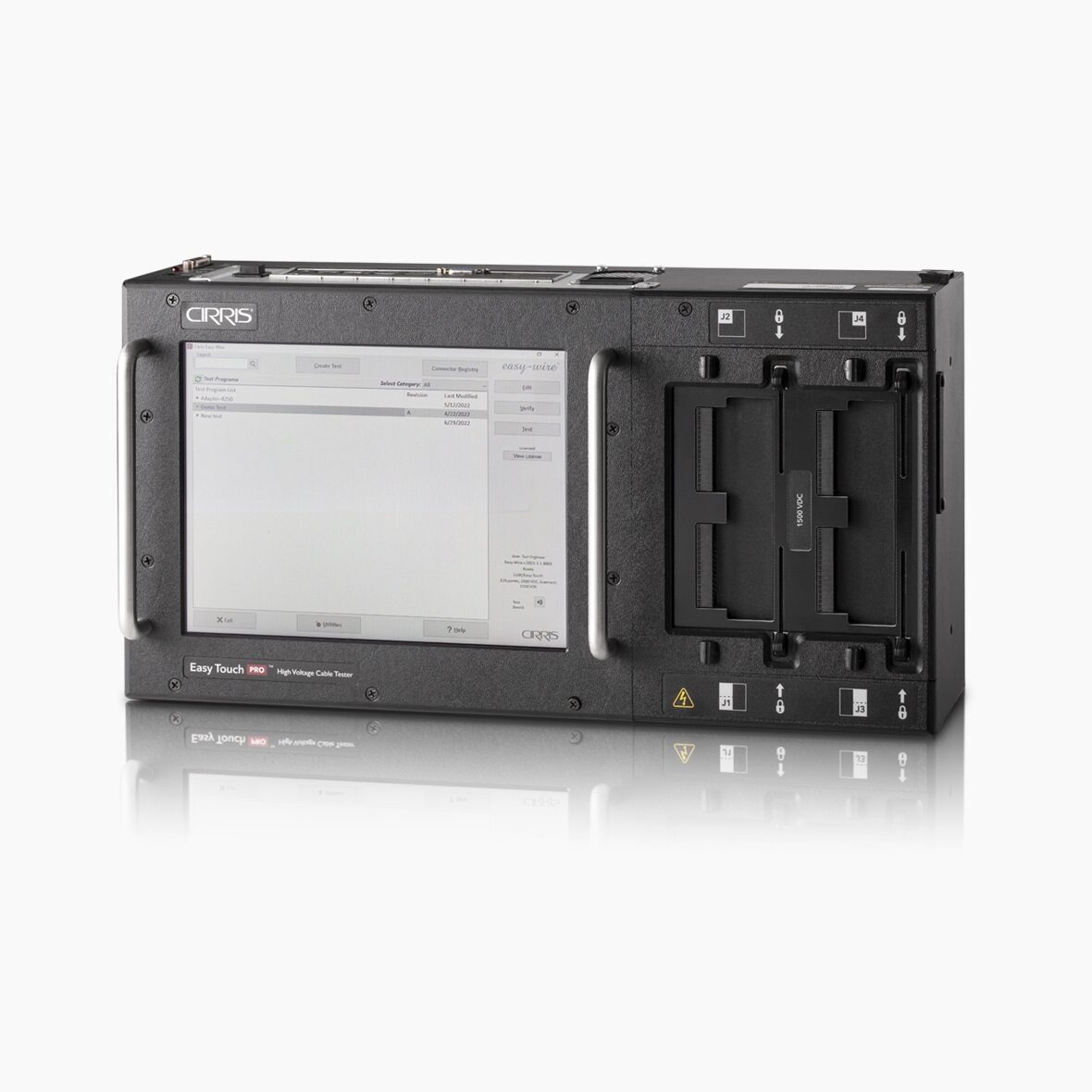
Check contact positions and locking against the design. The electrical test programme must match the circuit diagram and components. Continuity, insulation resistance and dielectric withstand testing are not the same check. High-voltage tests require suitable equipment, training and risk assessment.
Traceability and documentation
Link the product to material batches, revisions used and results. Define who approves initial samples and releases production. Record nonconformities and repeat checks. The format can be paper or digital, but it must allow the history to be reliably reconstructed.
Working checklist for your control plan
- Approved materials and current drawing
- Correct tooling and confirmed initial samples
- Measurements, criteria and inspection frequency
- Confirmed assembly and electrical test programme
- Traceable results and actions for deviations
Frequently asked questions
- Is this a ready-made standard? No; it must be adapted to your specification.
- Can one frequency cover everything? Intervals must be justified in the control plan.
- Is a good electrical test enough? It does not replace all mechanical and structural checks.
Sources
- Molex: Quality Crimp Handbook
- Schleuniger: Quality Assurance
- Cirris: testing harnesses with components
See the glossary and the Tekuni blog. For a specific application contact us.